
Introduction
Have you ever wanted to visit a destination but struggled to find someone whose schedule matched yours? Or perhaps you have dreamed of taking a journey where every decision is entirely your own. Solo travel offers the freedom to explore the world at your own pace. You can choose your destinations, change your plans, discover unfamiliar cultures, and spend time doing the things you genuinely enjoy. Although travelling alone can feel intimidating at first, it can also be one of the most rewarding ways to experience a new place. At Reason to Flyy, we believe every journey can teach you something new, especially when you give yourself the opportunity to explore independently.
1. Enjoy Complete Freedom
One of the greatest benefits of solo travel is the freedom to make your own decisions.
Want to spend an entire afternoon exploring a museum? You can. Prefer waking up early to watch the sunrise? You can plan your day around it. Feel like trying a local cooking class instead of visiting another tourist attraction? The choice is yours.
Without the need to coordinate with a group, you can create an itinerary that reflects your interests and travel style.
This flexibility makes solo travel especially appealing to people who enjoy spontaneous discoveries.
2. Discover More About Yourself
Travelling alone gives you an opportunity to step away from familiar routines and reflect on your interests, priorities, and goals.
You may discover that you enjoy hiking more than shopping, prefer peaceful destinations to crowded cities, or feel comfortable navigating unfamiliar places.
Managing everyday travel decisions can also encourage independence and problem-solving.
You do not need to travel to another country to experience this. A carefully planned solo weekend in a nearby city can be a great starting point.
3. Meet New People Along the Way
Travelling alone does not mean you must spend every moment alone.
Hostels, group tours, walking tours, cooking classes, and cultural workshops can provide opportunities to meet fellow travellers and local residents.
Shared activities often make conversations easier because everyone already has something in common.
At the same time, remember that you do not need to socialise constantly. One of the advantages of solo travel is choosing when you want company and when you want time to yourself.
4. Experience Local Culture More Deeply
Solo travel can encourage you to engage more directly with the places you visit.
You might ask a local guide about the history of a neighbourhood, learn a few phrases in the local language, attend a cultural event, or try a regional dish.
Travelling at your own pace gives you room to notice details that might otherwise be overlooked.
Approach cultural differences with curiosity and respect, and follow local expectations regarding clothing, photography, and behaviour.
5. Build Confidence Through Experience
Navigating a new transport system, checking into accommodation, planning daily activities, and handling unexpected changes can all help you develop practical skills.
At first, these tasks might seem challenging. With preparation and experience, they can become easier.
Start with manageable journeys and gradually increase the complexity of your trips. Confidence often develops through small successes rather than one dramatic experience.
Remember that asking for help when necessary is a sign of good judgement, not weakness.
6. Learn to Enjoy Your Own Company
Many people worry about eating alone, visiting attractions alone, or spending an evening without familiar company.
Solo travel gives you an opportunity to become more comfortable with these experiences.
Bring a book to a café, spend time photographing a beautiful street, or enjoy a peaceful walk without feeling the need to fill every moment with conversation.
You may discover that quiet moments become some of the most memorable parts of your trip.
7. Travel Safely and With Confidence
Preparation is essential when travelling alone.
Research the destination, choose accommodation with reliable reviews, and plan how you will reach your hotel after arrival. Share your itinerary with someone you trust and check in with them regularly.
Keep copies of important documents, protect your valuables, and avoid sharing your live location or room details publicly.
Use licensed transportation, be cautious when meeting people you have just met, and trust your instincts if a situation feels uncomfortable.
Save local emergency numbers and keep a backup payment method in a separate location. Review current travel advisories and local rules before departure.
Solo travel should feel empowering, not pressured. You can always change your plans if circumstances do not feel right.
Best Destinations for a First Solo Trip
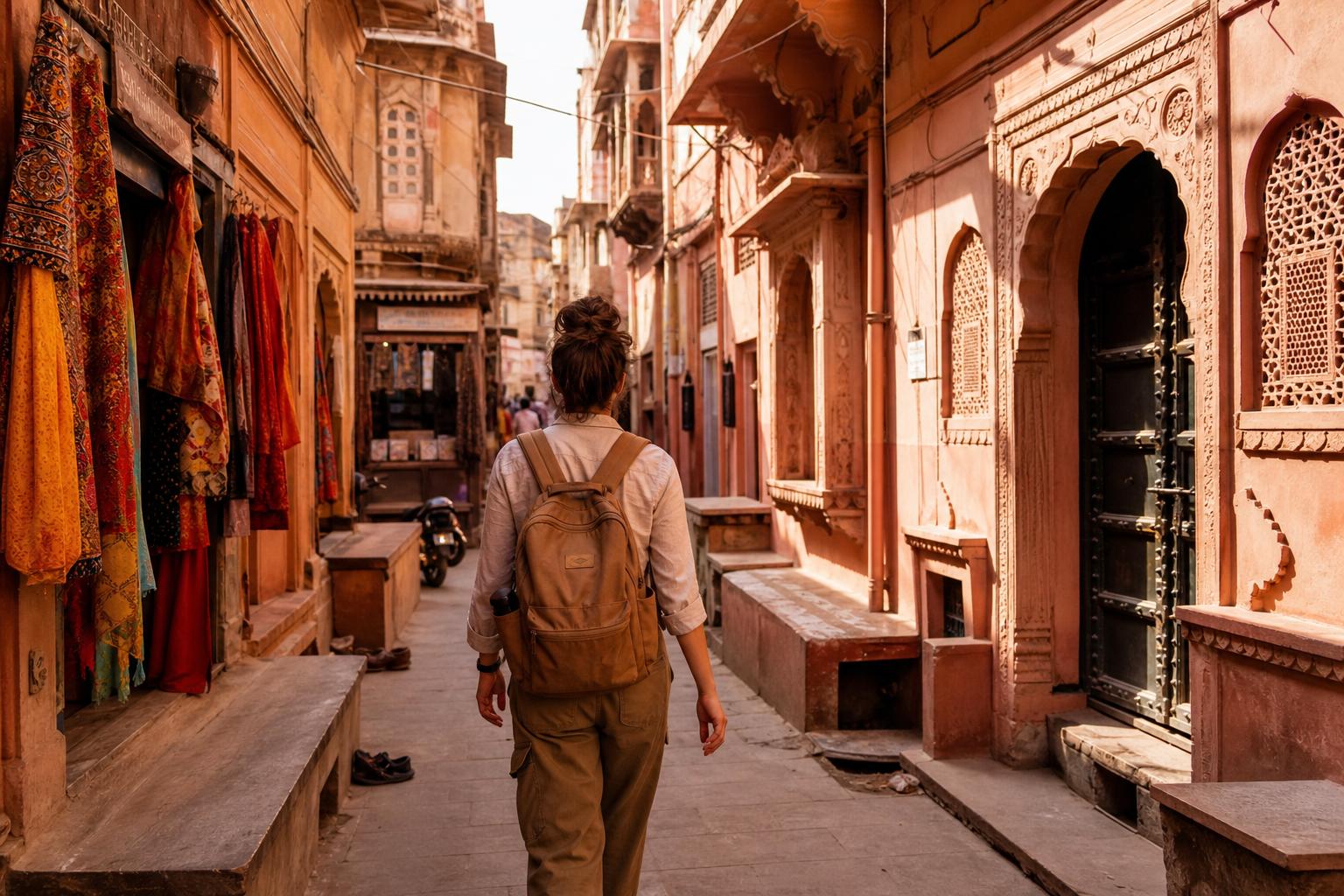
- Jaipur, India: A rewarding introduction to history, architecture, markets, and guided cultural experiences.
- Rishikesh, India: A destination for riverside walks, yoga, nature, and organised outdoor activities.
- Singapore: Efficient public transportation, diverse food, and well-known visitor attractions.
- Kyoto, Japan: Traditional streets, temples, gardens, and cultural experiences.
- Lisbon, Portugal: Historic neighbourhoods, viewpoints, and a lively café culture.
No destination is completely risk-free. Research current safety information, local customs, transport, and accommodation before booking.
How to Plan Your First Solo Trip
Begin by choosing a destination that matches your interests, budget, and comfort level. Select suitable travel dates and reserve your first night's accommodation in advance.
Plan your arrival route, identify nearby shops and transport stops, and keep your first day relatively simple. Book any essential activities ahead of time, but leave room for spontaneous exploration.
Pack light enough to manage your luggage independently. Download offline maps and save your booking confirmations for situations where mobile data may be unreliable.
Most importantly, allow yourself time to adjust. Your first solo journey does not need to be perfect to be worthwhile.
Conclusion
Solo travel is an opportunity to experience new destinations while discovering your own strengths and preferences.
It teaches flexibility, encourages independence, and allows you to create a journey shaped entirely around your interests. You may return home with beautiful photographs, new friendships, and a greater appreciation for your own abilities.
You do not have to wait until someone else is ready to travel. Start with a destination that excites you, prepare thoughtfully, and take the first step.
Reason to Flyy — Your journey, your freedom, your story.